
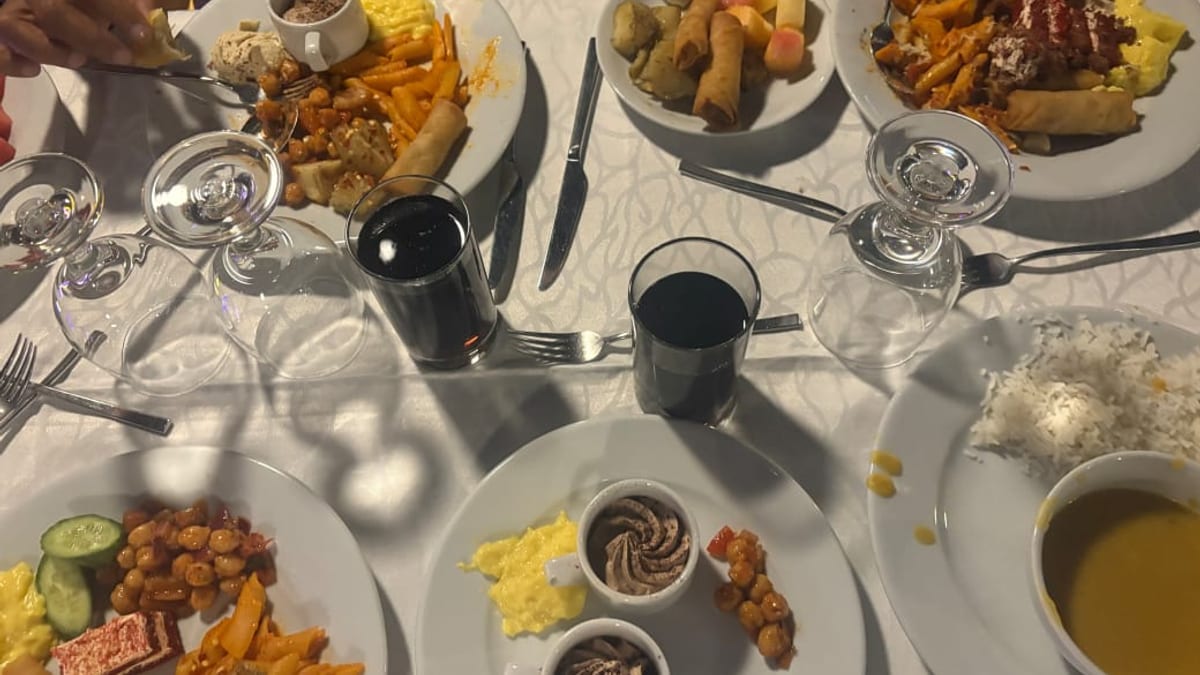
Start an Abu Dhabi food trip with an Emirati breakfast or light meal, a rice or wheat-based main dish, and something sweet with coffee. Choose restaurants around the neighbourhoods you are already visiting rather than crossing the city for every plate. Leave room for the broader dining scene, but distinguish food eaten in Abu Dhabi from dishes specifically rooted in Emirati cooking.
Begin with a few contrasts, not a long checklist
The most useful introduction is a meal with contrasting textures and flavours. Try something crisp or bread-based, something softly cooked, and one sweet element. Ordering several large rice dishes together may produce plenty of food without showing you much variety.
Abu Dhabi's tourism authority links local cuisine to the coast, trading history and spices such as saffron, cardamom and cinnamon. It also points visitors towards Mina Market and traditional souks as ways to understand the ingredients beyond a restaurant table. 1
You do not need to turn that background into a historical tasting marathon. Choose two or three dishes you are genuinely curious about, ask how large the portions are, and share where appropriate.
Names vary in English transliteration. Machboos and majbous, or luqaimat and legeimat, may appear differently on menus. Match the description to what you want to eat rather than treating every spelling as a separate dish. The menus and tourism listings linked below illustrate that variation. 23
Breakfast can be the most revealing meal
Balaleet is a useful first choice when you are open to a sweet-and-savoury combination: Meylas describes vermicelli flavoured with saffron and cardamom, served with an omelette. Chbaab offers another direction, with pancakes and accompaniments such as date syrup, honey or cheese. 2
Rgaag is a thinner bread option, with fillings depending on the restaurant. Khameer provides a different bread texture. Rather than ordering every bread at once, choose one alongside an egg dish or a sweet element, then ask for a recommendation that adds a contrast. 2
Meylas is a particularly relevant place to investigate because its own menu presents these dishes as part of its Emirati offering. The restaurant is associated with Al Muneera at Al Raha Beach; it should not be confused with Al Meylas, the separate Four Seasons lounge on Al Maryah Island. 45
That distinction prevents a surprisingly easy booking mistake. Send the restaurant's exact name and location to a driver, and use the operator's contact channel for a reservation.
For an early breakfast, confirm that your chosen dishes are served at that time. "All-day breakfast" and "breakfast available" are not necessarily the same menu promise.
Build lunch around one substantial main
Machboos is a sensible introduction for someone who enjoys seasoned rice with meat or fish. Al Mrzab's tourism listing identifies majbous among its Emirati offerings and places the restaurant on Airport Road. It also describes a choice of conventional tables and low seating. 3
Choose the seating arrangement that will make the meal comfortable. Low cushions may be part of the experience for one visitor and impractical for another; there is no need to choose discomfort for the sake of atmosphere.
Harees provides a different texture from a rice platter. Meylas's menu describes a savoury wheat preparation with beef and ghee. Its fareed combines stew with rgaag bread, illustrating another way bread becomes part of the meal rather than merely an accompaniment. 2
Ask how many people a serving suits. For two diners, one substantial main plus a contrasting smaller dish can be a better introduction than two similar platters. Order additional food after assessing the first dishes rather than filling the table immediately.
Al Mrzab is included here because the tourism authority documents its Emirati and Kuwaiti focus, not because this guide claims to have independently tasted or ranked its cooking. Its menu is a useful match for a traditional lunch when you are already in the city.
Use Al Fanar when Yas Island fits the day
Al Fanar's Yas Mall branch gives visitors a convenient opportunity to try Emirati food during a Yas outing. The operator describes a setting inspired by the UAE's earlier decades and locates the restaurant close to Ferrari World and the mall's attractions. 6
This is a practical recommendation about itinerary fit. It avoids sending a family back across Abu Dhabi simply to satisfy a food checklist after a theme-park day.
Select from the menu based on appetite rather than the number of familiar names. Ask which dish provides a good contrast with what you have already tried elsewhere. A grilled fish or stew may broaden the day more than another chicken-and-rice plate.
For an evening meal, confirm the actual kitchen closing time. The branch page displays inconsistent closing times in different sections, so a precise late-night arrival should not be based on one isolated line. 6
Do not interpret a themed setting as evidence that every recipe is identical to every Emirati household's version. Restaurants offer their own presentations; comparison is part of the enjoyment.
Make room for the coastal side of the city
Mina Market adds a useful ingredient-led stop to a food itinerary. The tourism authority highlights its seafood and nearby produce markets, with a reminder to consider sustainable choices. 1
Visit because you are interested in what is being sold, not because every stall automatically becomes a ready-to-eat restaurant. Before purchasing seafood for preparation, establish who cleans and cooks it, the full charge, the portion size and where you will eat.
A displayed price may apply to the raw item or a unit of weight rather than a finished meal. Clarifying the transaction beforehand is better than assuming that cooking, sides and service are included.
For a simpler meal, choose a restaurant with a clear menu and a fish preparation you understand. Ask whether the fish is sold as a portion or a whole fish and how the final price is calculated. This advice is especially useful when dining alone or with children who may not want to share the same dish.
Sweets and coffee should finish the meal, not overwhelm it
Luqaimat, also written legeimat on some menus, are a useful small introduction to the sweet side of Emirati food. Meylas lists fried dough served with date syrup; it also offers other sweets and Emirati coffee with dates. 2
Order dessert after assessing your appetite. A shared portion makes sense when the main meal has been generous. A separate coffee stop can also be more enjoyable than extending lunch simply to complete a list.
Ask how a sweet is prepared when you have an allergy or dietary restriction. Nuts, dairy, wheat and other ingredients can appear in fillings, accompaniments or preparation, and a familiar dish name is not an ingredient guarantee.
Similarly, a vegetable-looking stew or rice dish should not be assumed vegetarian without checking the stock, fat and other ingredients. Ask the restaurant directly and explain the ingredients you cannot eat.
A first-day eating plan that works geographically
For an Al Raha and Yas day, investigate breakfast or an early meal at Meylas, then plan the remainder of the day around that side of Abu Dhabi. Use Al Fanar for a later Emirati meal only if you still want one; there is no obligation to repeat a substantial traditional meal the same day. 46
For a central-city day, make Al Mrzab the principal meal and keep any market visit or coffee stop separate. Avoid booking both a large lunch and an elaborate dinner before you know your appetite.
For a very short stay, choose one restaurant with a clear Emirati focus and order thoughtfully. A well-chosen meal, with time to ask about the dishes, provides a better introduction than an exhausting sequence of distant venues.
The wider Abu Dhabi dining scene deserves attention too. The tourism authority describes restaurants and streetside cafés as part of the city's food experience, alongside its traditional cuisine. Enjoy that variety without requiring every meal to represent national heritage. 1
The goal is not to eat the greatest number of named dishes. It is to leave knowing which textures, flavours and styles you enjoyed - and how to order a second meal with more confidence than the first.