Al Hosn Festival is worth planning around for a concentrated introduction to Emirati crafts, food and hospitality. DCT's dated announcement places the next edition on 15–30 January 2027, but another official calendar shows different dates. Choose it for participation rather than a quick photograph of the fort, and keep festival admission separate from an ordinary Qasr Al Hosn visit. [1]
Which dates should you use?
There is a genuine trap in researching this festival: official pages for different editions remain discoverable. Abu Dhabi's dated announcement for the previous festival gives 17 January–1 February 2026, while the Department of Culture and Tourism's announcement published on 12 October 2026 places the next festival in January 2027. The earlier dates are history, not an alternative booking window. [1] [2]
A separate Experience Abu Dhabi culture calendar lists 22 January–4 February without making the edition year explicit. That conflict is unresolved: the dated DCT announcement is the clearer evidence for 2027, but travelers should not make non-refundable festival-specific arrangements until the live ticket calendar settles the dates. [4]
For a trip built specifically around the event, use the announced 2027 dates only for a provisional itinerary, then match your chosen day to the eventual ticket and programme. A season announcement establishes when an event is intended to happen; it does not establish the price, daily hours or workshop availability.
For travelers already visiting Abu Dhabi in January, the simplest approach is to leave one evening flexible. Avoid reserving a non-refundable dinner at exactly the time of a performance you have not yet selected. The festival should become the evening's main activity rather than something squeezed between unrelated reservations.
What makes the festival different from visiting the fort?
The attraction is the living culture around the monument. The organiser's description of the next edition emphasises traditions, crafts and local flavours, while the previous programme shows the kinds of encounters that can give that promise substance: artisan demonstrations, traditional music, coffee customs and family activities. Those examples describe the 2026 edition, not a confirmed 2027 running order. [1] [2]
Give preference to something you can watch being made or explained. An artisan demonstrating a technique is more revealing than a shopping stall without information about its products. At a coffee activity, pay attention to the hosting ritual rather than treating the drink as a complimentary refreshment. During a performance, stay long enough to understand its rhythm instead of collecting a few seconds of video.
A useful personal plan is to choose three priorities: one craft encounter, one performance and one meal or tasting. Everything else can remain optional. This is a planning recommendation, not a prescribed festival route, and it prevents a busy programme from becoming a succession of hurried stops.
For visitors interested mainly in architecture and historical interpretation, an ordinary daytime visit may be the better purchase. The permanent site and the festival overlap geographically, but they answer different questions: one explains the landmark, while the other brings people, practices and temporary activities into the foreground.
Tickets: what is known, and what not to assume
As of 27 October 2026, the announcement reviewed for the next edition confirms dates but does not provide a complete 2027 ticket tariff. Do not use a historical price as a current quote.
For context only, the previous edition advertised AED35 for visitors aged 13–59 and AED15 for children aged 5–12, with specified free-entry categories. Those were 2026 festival prices, not verified prices for January 2027. The same distinction applies to the previous edition's evening opening hours. [2]
When tickets become available, establish whether the product covers general festival access, a workshop, a timed activity or entry to the fort. Read the selected product rather than assuming that "Al Hosn" means every experience within the site.
The permanent attraction's official visitor information says that admission to House of Artisans, Cultural Foundation and the landscape is complimentary, with exceptions for Qasr Al Hosn, special workshops and events. That ordinary arrangement does not make a separately ticketed festival free. The site also describes its Al Hosn tickets as non-refundable. [3]
For a family, compare the actual basket total after entering each child's age. Do not multiply an adult headline price by the whole group, or assume that a free-admission category automatically includes every paid activity. Keep the confirmation and selected date together on one phone, with a second copy available to another adult.
Building an evening that does not feel rushed
Allow roughly three hours as an initial planning block, expanding it when the programme contains a performance or workshop you particularly want. This is an editorial allowance, not a measured average visit duration.
Begin with anything that has a fixed starting time. Flexible browsing should fit around that anchor, not the other way around. Next, choose the demonstration that most interests you, then leave time for food and a final walk. It is easier to skip a second shopping stop than to recover a missed workshop.
With children, reserve one participatory activity rather than assuming that watching several performances will hold everyone's attention. Ask about the activity's language, minimum age and whether an adult must remain present. A description marked "family" does not explain all three.
For photography, make the setting part of your visit without turning artisans into scenery. Ask before making a close portrait, and step aside when a demonstration is drawing a group. Your best souvenir may be a clearly understood technique or conversation rather than another wide shot.
Getting there and making purchases
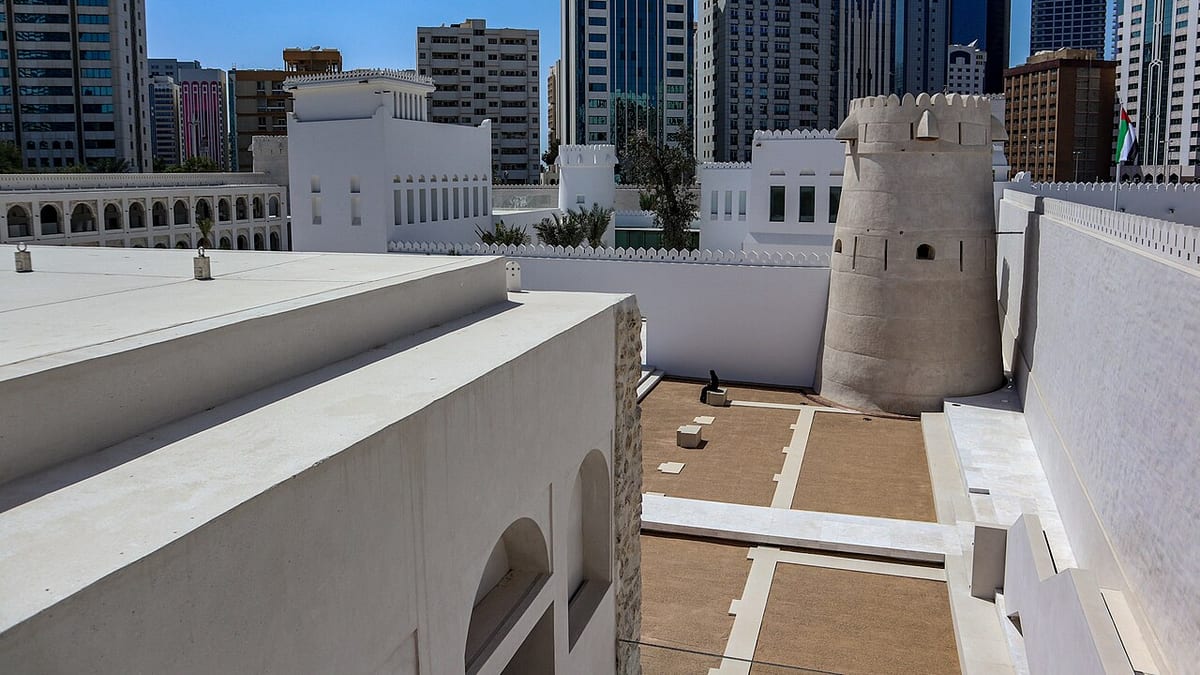
The permanent site is in central Abu Dhabi, bounded by streets including Hamdan Bin Mohammed Street and Sheikh Rashid Bin Saeed Street, near the World Trade Centre. Save the festival entrance once it is published, rather than relying only on a pin for the fort. [3]
For a taxi arrival, share that entrance location with the driver and agree on a recognisable pickup point for the return. For driving, use the event's parking instructions when released; ordinary visitor access should not be treated as proof that the same arrangement will operate during the festival.
When buying a craft object, ask who made it, where it was produced and what materials it contains. "Traditional style" and "made by an Emirati artisan" are different claims. Request care instructions for textiles or decorative pieces, and packing suitable for your onward journey. These questions make the purchase more meaningful without requiring you to become an expert.
Visiting outside the festival
Missing January's event does not mean missing Al Hosn. The ordinary visitor page lists Qasr Al Hosn hours of 9am–8pm Saturday–Thursday and 2pm–8pm Friday, with the separate admission arrangements described above. These are the permanent site's published hours, not the next festival's timetable. [3]
Outside festival dates, build a quieter cultural visit around the fort, House of Artisans and whatever is currently programmed at Cultural Foundation. During the festival, let a specific performance or workshop shape the evening. Choosing between those two experiences is more useful than assuming the festival is simply a busier version of the same attraction.
Source and editor notes
The dated DCT release announces 15–30 January 2027, while an undated official culture calendar lists 22 January–4 February without an explicit year. That conflict remains unresolved and is disclosed. The festival website was inaccessible; 2027 prices and daily hours were not independently established. Historical prices are labelled.