Louvre Abu Dhabi is worth visiting when you want both a substantial art museum and an architectural experience, rather than a quick photograph beneath the dome. The best-value visit combines the galleries with time outdoors. For architecture alone, the museum's published free evening access may be enough, but that does not include the galleries. [1][2]
What makes this more than a famous building?
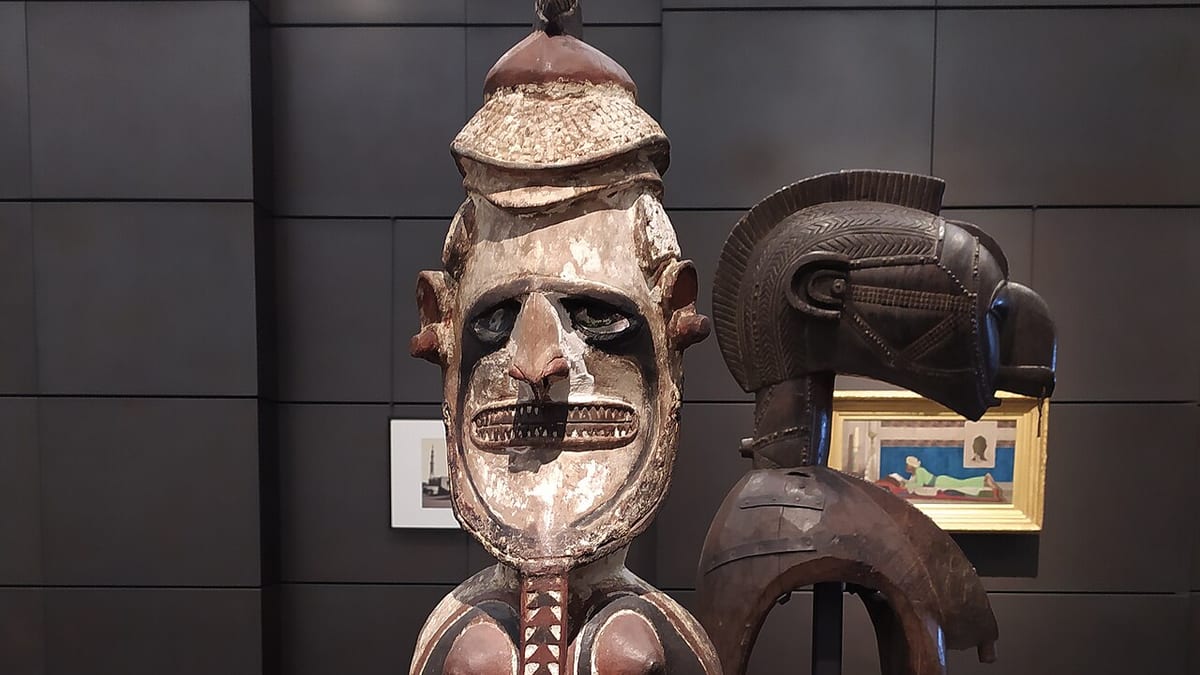
The collection is organised around connections between cultures, rather than a simple country-by-country parade of masterpieces. Archaeological objects, sculpture, paintings and contemporary work share a broader story about how people have made, exchanged and understood things. That is the museum's stated curatorial approach, not a promise that every famous object you have seen online will be displayed. [3]
This makes the museum particularly rewarding for visitors who enjoy comparison. Instead of trying to memorise an entire chronology, choose a question to carry through the galleries: how people represented power, how religious ideas travelled, or how useful objects became beautiful ones. You do not need specialist knowledge to make those connections.
Give yourself permission to linger over a few objects. An unfamiliar work that explains something new can be more memorable than collecting photographs of recognisable names. Read the introductory text in each section before deciding which individual labels deserve your attention.
The architecture supplies a different kind of interest. Jean Nouvel's dome filters sunlight through layered geometric openings, creating the changing pattern the museum calls its "rain of light." The surrounding low-rise buildings and water are integral to the design, not merely scenery outside the collection. [4]
For that reason, I recommend seeing the galleries and exterior spaces as two parts of one visit. Someone uninterested in art can still appreciate the building, but paying for a full museum visit solely to take a dome photograph is a different value proposition.
What the ticket buys - and when you may not need one
The published adult admission is AED 70 including VAT. Under-18s enter free. The senior concession is not universal: the museum identifies UAE senior nationals and residents aged over 60, rather than every overseas visitor over that age. Other listed concessions include People of Determination with one companion. Bring evidence for any entitlement you intend to use. [1]
A straightforward calculated example is AED 140 for two full-paying adults, whether they visit alone or bring two eligible under-18 children. Food, transport and separately booked activities are additional. Compare the actual people in your party rather than assuming a commercial "family package" is automatically cheaper.
For visitors interested only in the building, the FAQ publishes complimentary access after 6:30pm Tuesday–Thursday and 8:30pm Friday–Sunday, once the galleries have closed. The dome remains open until midnight, with last entry at 11pm. This is evening access to the public museum setting, not a free late-night visit to the art collection. [2]
That distinction changes the recommendation. Choose paid daytime admission for art, context and daylight beneath the dome. Consider the published evening arrangement for an architectural stop after dinner. Do not arrive after gallery closure expecting to turn an outdoor visit into an indoor one.
The museum also lists multi-museum passes. They deserve a comparison only when you genuinely intend to visit the other included institutions. A bundle that pushes you into a rushed second museum is not necessarily better value than one well-used ticket. [1]
Resolve the Monday question before building your itinerary
The current Visit Us and booking pages list galleries open Monday–Thursday, 10am–6:30pm, and Friday–Sunday, 10am–8:30pm, with last admission 30 minutes before closure. However, an older official directions page still describes Monday closure. The website has not been fully reconciled. [1][5][6]
Use the current dated booking availability for your intended Monday, or obtain confirmation from the museum. For a flexible itinerary, a Tuesday–Sunday visit avoids that particular contradiction. The free evening access wording also omits Monday, so do not extend that offer to Monday merely because another page says the dome opens daily. [2]
Regardless of day, last admission is a deadline, not a useful arrival target for a first visit. My planning recommendation is roughly three hours for a selective gallery route, an outdoor pause and some unhurried looking. A visitor deeply interested in the collections could easily choose longer; a dome-only visit requires a different allocation.
If you want daylight and an evening atmosphere, work backwards from the gallery closing time. Finish the indoor part first, then spend your remaining time under the dome. That sequence protects the part of the visit with the tighter deadline.
Visiting with children without turning it into a forced march
The current children's exhibition is A Board Game Adventure, scheduled from 18 July 2026 to 25 April 2027. It uses games including chess, mancala, ludo and carrom to explore cultural exchange, with objects and loans relating to the history of play. Older references to a different children's exhibition should not determine expectations for this period. [7]
A workable family plan is to make that exhibition an anchor rather than a reward after every adult gallery. Agree on a small number of other objects to see, and ask children to choose something they would like to understand. This gives the visit a purpose without requiring a complete circuit.
The decision is less about whether a child is "old enough for art" than whether your proposed pace fits them. A short, engaged visit can be successful even when much of the collection remains unseen. Leave room for food and a rest rather than interpreting the free child admission as a reason to stay all day.
Wheelchairs and strollers are available for complimentary loan, according to the museum. For a particular accessibility requirement, establish the relevant route and equipment arrangement rather than assuming every temporary exhibition has identical conditions. [1]
Make the journey support the visit
The museum is on Saadiyat Island. Its directions identify city bus 94 and a taxi pickup/drop-off point at the visitor car park. These are useful options, but the published route number is not a timetable: plan your actual connection and return before leaving your accommodation. [1]
Do not attach several distant attractions simply because they appear together on an Abu Dhabi highlights list. For a museum-focused day, protect enough time to read and pause. For a broader city tour, decide which single cultural stop matters most and give it an honest slot.
Practical preparation is uncomplicated. The museum's free app supplies multimedia interpretation on your own device. Its FAQ prohibits food and liquids in galleries and directs visitors with larger bags to the cloakroom. Download what you need and organise belongings before starting, rather than interrupting the gallery route repeatedly. [2]
The strongest reason to go is the combination: objects that invite comparison, a building shaped by light, and enough space in your schedule to notice both. Visitors seeking only an outdoor photograph should choose their access window accordingly; visitors curious about the collection should not reduce it to the interval before sunset.
Sources
- Louvre Abu Dhabi: current visit, admission and access information
- Louvre Abu Dhabi: visitor FAQ and evening access
- Louvre Abu Dhabi: collections and experiences
- Louvre Abu Dhabi: architecture
- Louvre Abu Dhabi: current ticket page
- Louvre Abu Dhabi: older directions page with conflicting Monday hours
- Louvre Abu Dhabi: A Board Game Adventure