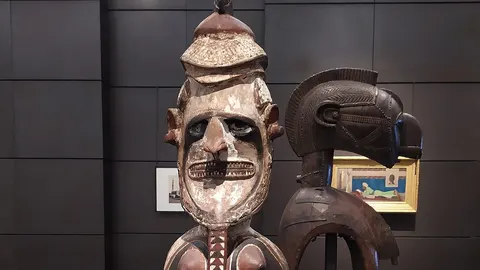
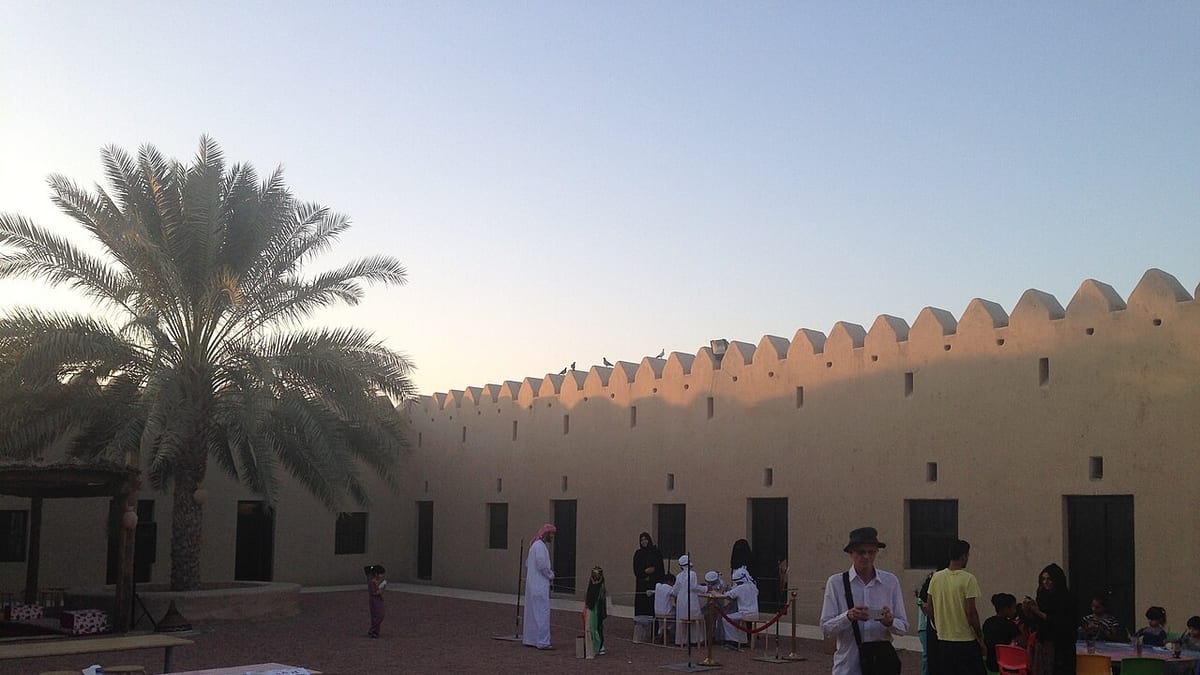
Al Qattara Arts Centre is worth visiting when you are already exploring Al Ain and want a smaller cultural stop combining restored architecture, archaeology and contemporary creative activity. It is less compelling as the sole reason for a long return drive from Abu Dhabi unless you have confirmed an exhibition, workshop or other programme that particularly interests you.
The centre occupies the historic Bayt Bin Ati al-Darmaki fort overlooking Al Qattara Oasis. Visit Al Ain describes a traditional mud-brick house and tower adapted as a place for arts education and cultural activity. That combination makes it different from a large museum where the main purpose is moving through an extensive permanent collection. [1]
What makes this more than another gallery
The strongest reason to visit is the relationship between the building, its setting and what was found beneath it. Archaeological work during the centre's development revealed layers reaching back to the Iron Age, and the official visitor information describes early industrial installations displayed in a redesigned basement. [1]
That is a more distinctive proposition than simply "a gallery in an old building." You can approach the visit as a sequence: first understand the structure above ground, then see how the archaeological evidence changes your reading of the site, and finally look at whatever artistic activity or exhibition is available.
Do not expect an archaeological visit on the scale of a major national museum. The attraction is the connection between a specific place and the evidence preserved there. For travellers who enjoy examining how buildings are reused, that can be more satisfying than a longer collection with little connection to its surroundings.
The official Abu Dhabi tourism listing also describes a gallery showing work by Emirati and expatriate artists. This gives the centre a contemporary role rather than presenting local culture only as something belonging to the past. An exhibition's actual content, however, depends on the programme operating during your visit. [2]
Exhibitions and workshops are different reasons to come
A casual exhibition visit and a booked class should be treated as separate products. The presence of a pottery studio does not mean you can arrive at any time and make a pot. Equally, a photography room is a facility, not evidence of a daily visitor activity.
Official descriptions list spaces for pottery, calligraphy, painting, music, digital work and other creative programmes. Use that range to identify a suitable activity, then establish the date, language, age requirement, duration, fee and booking arrangement for the particular session. [1]
For a family, ask whether the activity is designed for children to participate independently or requires an accompanying adult. Ask whether materials are included and whether an object can be taken away immediately. These are practical questions to resolve, not assumed conditions of the centre's current classes.
For adults, the important distinction may be between a short introductory activity and a multi-session course. A course that sounds appealing in a programme brochure may not suit a traveller with one afternoon in Al Ain. Book the session you can actually attend rather than making the centre fit a vague expectation of "something creative."
A confirmed workshop can justify giving the centre a major place in the day. Without one, I would keep it as a flexible cultural stop rather than building the entire itinerary around unverified programming.
How much time should you allow?
As an editorial planning allowance, reserve around an hour to an hour and a half for an unhurried building, archaeology and exhibition visit. This is not a measured average or an official recommended duration. A focused visit could be shorter, while an organised activity requires the time stated by its organiser.
Do not use that allowance to infer how much of the building will be open. The visitor pages explain the centre's facilities but do not establish a dated room-by-room access schedule. Ask specifically about the archaeological display and current exhibition when those are your main reason for travelling.
The official listings reviewed for this guide did not provide a sufficiently clear current admission price and daily timetable to publish confidently. Older descriptions elsewhere should not be treated as a dependable promise of free entry or particular evening hours. Confirm the arrangements with the centre once, before fixing your Al Ain day around it. [1][2]
That uncertainty does not make the attraction unusable. It changes how you schedule it: place the visit within a wider Al Ain itinerary, rather than attaching it to a non-refundable activity immediately afterwards with no flexibility.
Pair it with the oasis, not a cross-city checklist
The centre overlooks Al Qattara Oasis, whose official visitor description discusses the palm gardens, historic buildings and associated souq. It therefore makes sense to think in terms of a neighbourhood visit rather than driving away immediately after the gallery. [3]
Do not confuse Al Qattara Oasis with Al Ain Oasis. They are separately named places, and the latter has its own official visitor information. Sending a driver or navigation app to the generic word "oasis" can take you to a different part of the itinerary. [3][4]
A practical sequence is the arts centre, a nearby walk where access is permitted and lunch before your next main attraction. Keep the outdoor portion responsive to heat and to the conditions of anyone travelling with you. The plan should still work when the walk needs to be shorter.
For a broader heritage day, Qasr Al Muwaiji offers a different focus: the history of the ruling family and its historic setting. Pairing one concentrated visit there with Al Qattara creates contrast without requiring a long list of museums. [5]
Alternatively, make the arts centre your quieter stop after a larger attraction. It can work particularly well for a repeat visitor who has already covered Al Ain's most familiar sights and wants a more specific cultural experience.
Who should prioritise it - and who can skip it?
Prioritise Al Qattara when you enjoy architecture, local arts practice, archaeology or an activity with a clear educational element. It is also a sensible choice when a particular exhibition or workshop matches an existing interest. These are criteria for choosing the stop, not a claim that every visitor will find the same programme engaging.
Visitors looking mainly for spectacular interiors, a large permanent art collection or an extensive interactive children's museum should not substitute Al Qattara on the assumption that all cultural attractions are interchangeable. Read the actual programme and choose according to what you expect to do.
Accessibility also needs a specific question rather than a general label. Ask about the route to the basement display, thresholds, seating and any studio involved in your booking. A family-friendly description does not establish step-free access to every room or activity. [1]
Visit Al Ain places the centre in a city roughly an hour and a half from Abu Dhabi, but your actual door-to-door journey depends on starting point and traffic. [1] For that reason, the best recommendation is conditional but clear: include it in an Al Ain day, or travel for a confirmed programme. Do not make the journey solely on the assumption that every advertised studio will be offering a drop-in experience when you arrive.