
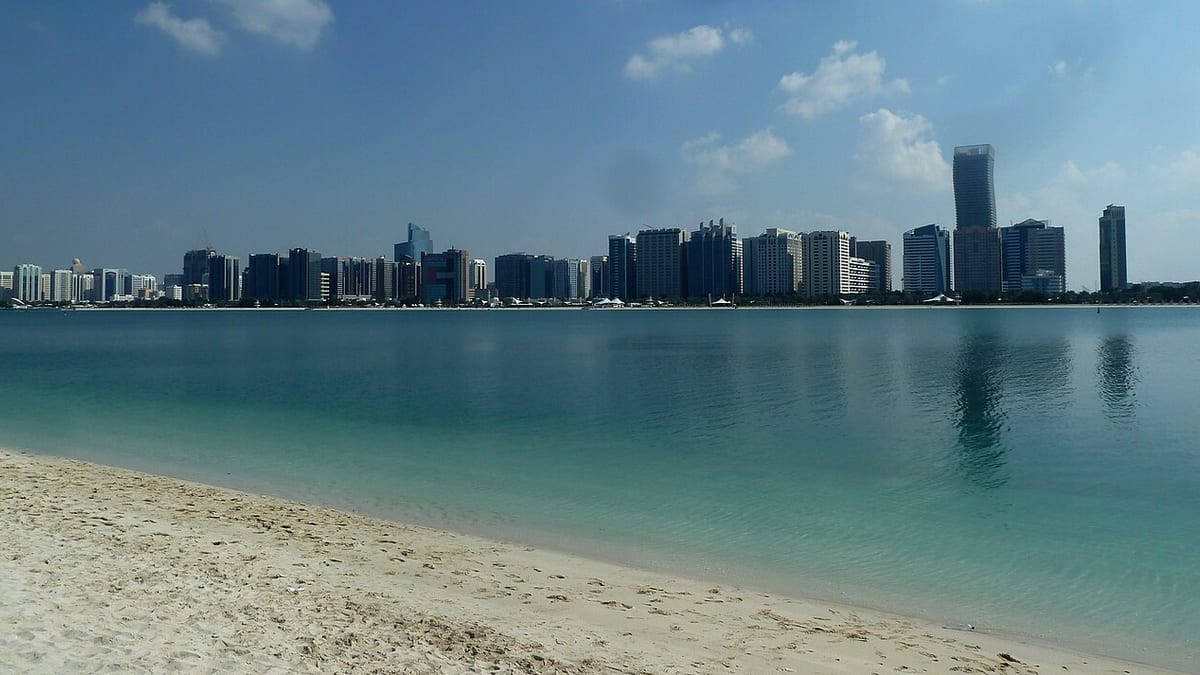
The best time to walk Abu Dhabi Corniche is early morning or late afternoon in the cooler months, with the final hour before sunset a good starting point for an easy waterfront outing. In summer, shorten the walk and prioritise comfort over a dramatic sky. The promenade and the beach are different facilities, so an evening stroll does not imply swimming access.
Choose your route before choosing the time. Abu Dhabi's tourism authority describes an eight-kilometre waterfront with separate pedestrian and cycling paths, cafés and children's play areas. Walking a pleasant section is a different undertaking from covering its full length and returning to where you started. 1
Winter gives you the most flexibility
November through March is the most forgiving period for a walking-led visit. Abu Dhabi Residents Office describes this as the cooler season, while the tourism authority places the core winter period between December and mid-March. These are seasonal descriptions rather than a forecast for a particular day. 23
An early walk suits people who want a quieter start, exercise before breakfast or photographs before a busy sightseeing day. A late-afternoon walk suits a more relaxed itinerary: finish an indoor attraction, return to the hotel if necessary, then head to the waterfront without carrying everything you used during the day.
Midday can be workable in winter, but do not interpret "winter" as a promise of cool conditions. Look at the day's forecast and the amount of exposed pavement in your chosen route. A sunny hour with little shade can feel very different from the same temperature in an air-conditioned lobby.
For families, the most comfortable slot may be the one that matches naps and meals rather than the most photogenic light. A short walk after an early dinner can be a better experience than keeping tired children outside for sunset.
In summer, darkness is not the same as coolness
The Residents Office describes June to September as generally extremely hot and humid. The tourism authority also emphasises the role of indoor attractions during the hot season. A waterfront breeze can make an evening pleasant, but it is not a dependable cooling system. 23
In these months, plan a short segment close to your hotel, a café or an easy pickup point. Start with a distance you can comfortably abandon halfway through. Do not commit to a long one-way route simply because the map looks flat.
Early morning is often the more useful planning choice for a purposeful walk because you can finish before the day develops. Evening is better for a leisurely outing when the main aim is dinner and a view. Neither choice guarantees comfortable conditions; use the actual weather and your own tolerance.
Carry drinking water and keep the return flexible. A taxi back is not a failure to complete the itinerary. It is a sensible alternative when the outing has stopped being enjoyable. Anyone with particular health concerns should follow their clinician's advice about heat exposure rather than treating a general travel article as medical guidance.
Sunset: plan the walk, not just the photograph
A useful sunset plan begins before the sun reaches the horizon. Arriving roughly an hour beforehand is an editorial suggestion that leaves time to find a comfortable stretch, walk a little and decide where to pause. It is not a measured minimum or a guarantee of a particular sky.
Check sunset for your actual date. A fixed "best time" copied from another season can leave you arriving in darkness or waiting much longer than expected. Also consider haze and cloud: the quality of the view matters more than precisely matching a clock time.
Choose whether you want to photograph people, the skyline or the water. Those subjects may call for different directions of view. Walk a short distance and compare the light before settling into one position. Do not assume that every part of an eight-kilometre waterfront presents the same scene.
After the light changes, decide whether to continue, eat or leave. An open-ended walk tends to become much longer than planned, especially when the return journey retraces the same path.
Pick a manageable section
For a first visit, I recommend choosing two recognisable access points and treating the stretch between them as the outing. A café, hotel entrance or clearly identified beach gate makes a more useful endpoint than a vague instruction to "walk along the Corniche."
The official description identifies separate cycle and pedestrian paths. Stay on the walking side and leave the cycle route clear when stopping for photographs. Groups should pause together away from through traffic rather than spreading across both routes. 1
A simple time budget can prevent overambition. If you have one hour in total, do not spend the entire hour walking away from your starting point. Allocate part of it to the outward walk, part to stopping and part to returning or reaching a pickup location.
For a one-way stroll, save the destination pin before you set out. This is especially useful when your hotel is inland: the nearest point on the waterfront and the most convenient road access may not be identical. Review crossings rather than relying only on straight-line distance.
Beach access has its own rules
The Corniche promenade, beach facilities and swimming area should not be treated as one continuously open attraction. The municipality's Corniche Beach information lists swimming from morning until sunset. That means a pleasant after-dark walk should not be turned into an assumed night-swimming opportunity. 4
A beach visit also changes what you need to carry and how much time you need. Decide beforehand whether this is a walking outing with a view of the sea or a proper beach session. Combining them casually can leave you carrying towels and clothing for a much longer distance than intended.
Follow the posted instructions at the particular beach section you use. Access arrangements and facilities can differ, and a general waterfront article is not an admission ticket or a statement that every section has identical rules.
Fit the Corniche into the rest of your day
The waterfront works well as a deliberate contrast to an indoor museum or shopping visit. It does not need to become another major expedition. In the cooler season, give it a generous window; in hotter conditions, make it a brief outdoor interval followed by a meal.
For a traveller who values photography, protect the daylight slot and move shopping elsewhere. For someone who values relaxed conversation, choose a comfortable temperature and an easy place to sit. For exercise, prioritise a repeatable route and a reliable return.
The most useful Corniche plan is therefore specific: a chosen section, an appropriate time for the season and a clear way home. That combination matters more than walking the full waterfront or arriving at an allegedly perfect minute.