
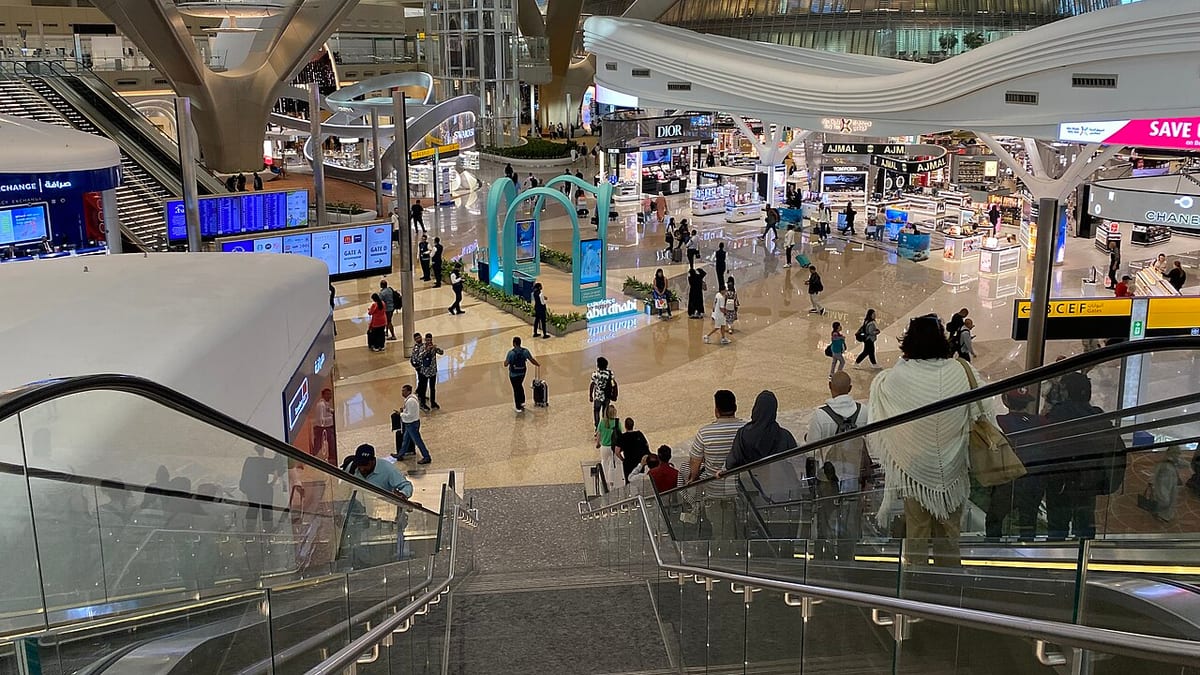
Plan to reach Zayed International Airport about three hours before an ordinary international departure, and at least four hours before an Etihad flight to the United States. Treat three hours as a planning baseline, not a guarantee. An airline instruction, assistance appointment or applicable overnight baggage alert can require an earlier arrival. [1][2][3]
The time that matters is arrival at the correct departure area with your documents and luggage, not leaving your hotel. Working backwards from the flight also means distinguishing a recommended arrival time from the last moment an airline will accept a passenger or bag.
Use the airline's deadline, not a generic airport listing
Etihad's current Abu Dhabi guidance says airport check-in opens four hours before departure and closes 60 minutes before departure in Economy, or 45 minutes before in Business and First. Those are acceptance cutoffs, not sensible times to enter the terminal. [2]
There is a discrepancy worth knowing: the airport's Etihad directory entry displays a general "three hours to 45 minutes" check-in window. That does not reproduce the airline's cabin-specific limits. For an Etihad booking, use Etihad's own operational instructions and your flight notification rather than assuming the shorter airport-directory entry applies to Economy. [4][2]
The three-hour starting point is consistent with Etihad's published advice for the 2026 Eid al-Adha and summer period. That was a dated seasonal announcement, however, not evidence that every subsequent departure has identical conditions. Any more demanding instruction attached to your booking takes precedence. [1]
For a hypothetical 14:00 Economy departure, a three-hour plan means entering the departure area at 11:00, while the airline's stated check-in cutoff is 13:00. The two-hour gap is your allowance for completing check-in and dealing with problems before that deadline. It is not two spare hours to spend elsewhere in the airport.
For another carrier, obtain its own deadline. The airline operating the aircraft matters, especially with a codeshare ticket. Do not apply Etihad's premium-cabin rules to an unrelated airline simply because both depart from AUH.
U.S. flights need a separate timetable
Etihad asks U.S.-bound passengers to arrive at Terminal A at least four hours before departure. It directs Economy travellers towards the U.S. preclearance facility two hours before the flight, and Business, First and The Residence passengers 90 minutes before. [2]
Preclearance means the relevant U.S. immigration, customs and agricultural inspections take place before leaving Abu Dhabi. This is about the flight's destination and applicable service, not simply whether the traveller holds a U.S. passport. The UAE government describes the arrival in the United States as a domestic-style arrival after these procedures. [5]
For a hypothetical 10:00 Etihad U.S. departure, the four-hour instruction puts you at the airport by 06:00. An Economy passenger should then follow the airline's direction to the preclearance facility at 08:00. Do not spend the intervening time in a lounge without accounting for the remaining formalities.
Etihad's published preclearance guidance also says the facility closes one hour before the flight. Its September 2026 update confirms continued full preclearance services for eligible U.S.-bound flights. Follow the flight-specific instructions rather than treating a normal international departure checklist as sufficient. [6][7]
The practical benefit is at the other end of the journey; it does not mean fewer airport procedures before take-off. A later premium check-in cutoff is not permission to ignore the earlier preclearance reporting instruction.
An undated overnight alert needs extra attention
As checked on 28 October 2026, AUH's travel-alert page publishes a notice about overnight baggage-system maintenance between 23:00 and 05:00. It warns that some late-night and early-morning check-in may be handled manually and advises arrival at least three and a half hours before an affected international departure. [3]
The notice gives no clear start or end dates. It would therefore be misleading to describe it as either a permanent airport rule or a precisely dated disruption. For an overnight flight, ask the airline whether it affects your departure and use the longer allowance while it remains applicable.
This is a specific reason not to assume that an airport will always be quicker late at night. Your plan depends on the process operating that night, not just on how empty the public hall looks.
For a flight at 00:45 on 29 October, three and a half hours earlier is 21:15 on 28 October. A four-hour arrival would be 20:45 on 28 October. These are calculated examples: the evening before the printed departure date is the relevant evening for the transfer booking.
Write both dates into a hotel pickup request. "Wednesday night" or "after midnight" can be interpreted differently; an explicit date and 24-hour time are safer.
Online and city check-in remove tasks, not all deadlines
Etihad's online check-in opens 30 hours before departure. The airline explains that some passengers still need an airport document check and may be unable to download a boarding pass, even after starting the online process. Do not treat a successful login or seat selection as proof that every airport formality is complete. [8]
Its city and home check-in options can reduce the luggage work remaining at the terminal. The current FAQ says these services can also be used for U.S.-bound Etihad flights from Abu Dhabi. That does not remove the requirement to attend U.S. preclearance. [8][2]
The sensible benefit is less pressure within your existing airport allowance, not automatically arriving as late as possible. Before shortening a plan, establish exactly which procedures have been completed, whether you have an accepted boarding pass and whether your airline has given a different arrival instruction.
Families should keep essential documents together but accessible, and decide who handles the luggage and who stays with children during check-in. Travellers using assistance should plan around the confirmed meeting arrangement rather than estimating how quickly an ordinary unassisted passenger might move.
Build the airport journey separately
Choose the airport-arrival target first. Then add the time from your actual hotel, home or previous activity, plus a margin appropriate to that journey. A road estimate ending at the airport entrance is not the same as reaching the check-in row with everyone and every bag.
For a simple planning example, suppose your target is 11:00 and you allow 50 minutes for the transfer plus 20 minutes for pickup and unexpected delay. You would arrange departure around 09:50. Those journey figures are hypothetical assumptions, not measured travel times from any particular Abu Dhabi district.
The same principle applies to returning a rental car: include the return process and reaching departures before the airport clock starts. A cheap or convenient transfer is useful only if it gets you to the right place with a workable margin.
After check-in, follow the gate information and boarding time on your own pass. Do not use the aircraft's scheduled departure as the moment to leave a restaurant. A good AUH plan protects the earliest relevant deadline, then leaves enough time for the remaining route to the aircraft.
Sources
- Etihad: 20 May 2026 seasonal airport-arrival advice
- Etihad: Abu Dhabi check-in and U.S. arrival instructions
- Zayed International Airport: overnight baggage-system alert
- Zayed International Airport: Etihad directory entry
- UAE government: U.S. preclearance
- Etihad: U.S. preclearance process and facility cutoff
- Etihad: 10 September 2026 preclearance update
- Etihad: online, home and city check-in