
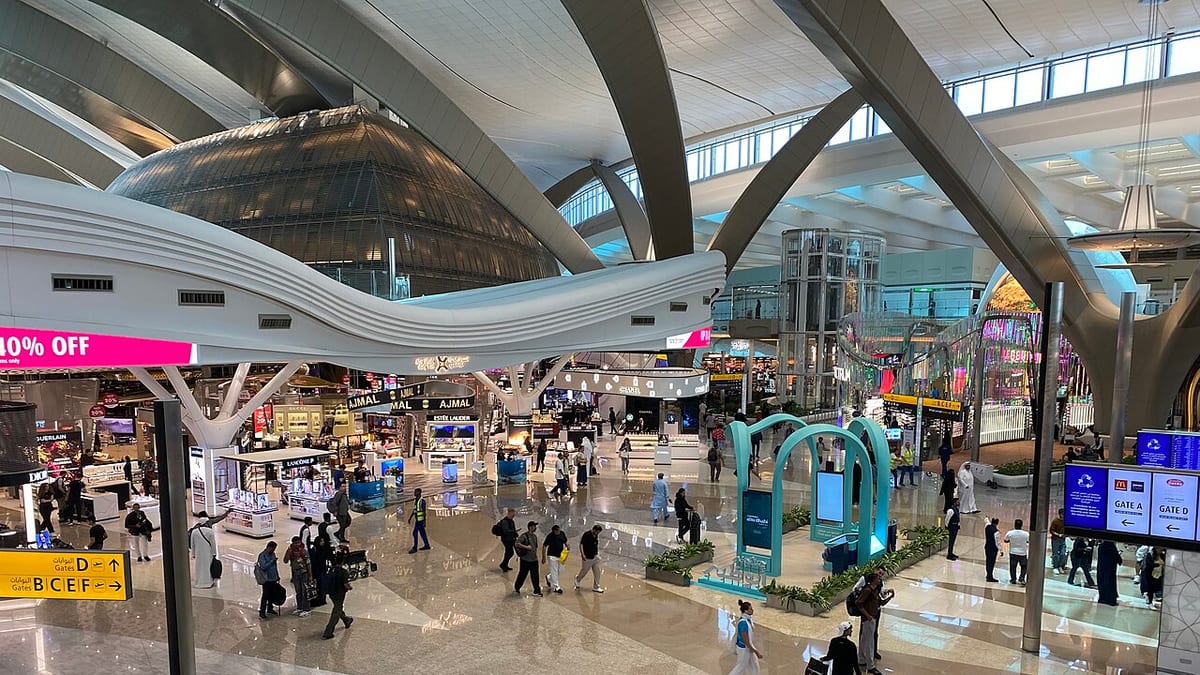
At Zayed International Airport, use Terminal A as your main passenger-terminal reference and follow the signs for your actual journey: arrivals if entering Abu Dhabi, transfers if continuing on a through itinerary. The airport says flights operate from the main terminal without inter-terminal transfers. Your next decision is therefore usually about baggage and boarding, not choosing between old terminal numbers. 1
Older articles describing Terminals 1, 2 and 3 can be misleading. Abu Dhabi's official announcement records the airline transition to Terminal A in November 2023 and the change to the Zayed International Airport name in February 2024. The airport code remains the familiar AUH. 2
Arrivals and transfers are different paths
If Abu Dhabi is your destination, follow the arrivals route through the applicable entry formalities, then collect checked baggage from the carousel shown for your flight. The airport directs passengers with items to declare to the appropriate customs lane. 3
If you are continuing to another flight and your baggage is checked through, follow the purple Transfer signs instead. The airport explicitly warns connecting passengers not to follow Arrivals or Baggage Claim by default. Transfer security, flight-information screens and the next gate are the relevant sequence. 1
Make that decision before joining a queue simply because most passengers are going in one direction. People leaving the same aircraft can have very different itineraries.
If the correct path is unclear, show staff the onward booking and baggage receipt. Explain whether the flights are on one ticket and whether the bag tag names your final destination. Those details are more useful than saying only that you are "in transit."
Check baggage arrangements before leaving the first airport
On a single ticket, baggage is typically transferred automatically, but the airport advises confirming the tag and arrangement with the originating airline. A through booking is useful evidence, not a reason to ignore the actual bag tag. 3
With separate bookings, establish whether collection and re-checking are required. Do not assume an airline will move the bag merely because both flights use the same terminal. The ticketing relationship and handling agreement matter.
If collection is necessary, you may need to enter the UAE and complete a new departure process. Entry eligibility depends on your circumstances; verify it with the responsible authorities and airline rather than treating a connection as automatic permission to cross the border.
For cabin-bag-only travel, the absence of checked luggage simplifies one part of the process but does not erase check-in, document checks or the onward airline's deadlines. Confirm that you have a valid boarding pass or can obtain one at the transfer desk.
Find the gate before settling into a lounge
After the necessary screening, read the departure screens using the flight number and destination. Gates can change, and an old screenshot or an early boarding pass should not be the only source of information.
Locate the gate route before committing to a meal, shopping or a lounge visit. The important deadline is boarding and gate closure, not merely the aircraft's scheduled departure time.
The airport's transfer guide notes that some Etihad-to-Etihad connections can be as short as 45 minutes, but it tells passengers to use the airline's specific minimum connection time. That example is not a safe rule for self-booking separate flights or planning a leisurely stop. 1
A sensible connection budget accounts for disembarking, screening, walking and any boarding-pass issue. Mobility needs, children and carry-on luggage may alter the practical pace. Request assistance through the airline or airport arrangements rather than assuming the shortest advertised connection suits everyone.
For a delay, contact the airline or transfer staff early. Do not spend the remaining connection time trying to solve a ticketing issue through an unrelated retail desk.
US-bound flights need a separate preparation step
Etihad's US preclearance guidance tells passengers starting their journey in Abu Dhabi to check in at least four hours before departure. It asks economy passengers to reach the preclearance facility two hours before the flight, with a different 90-minute instruction for Business, First and The Residence; the facility closes one hour before departure. These are the airline's published instructions, not a generic airport-arrival rule. 4
Connecting travellers should follow their flight-specific directions and ask staff how the process fits their connection. Do not apply an ordinary gate-walking allowance to a journey that still requires US formalities.
Keep travel documents available and complete any required preparations before reaching the facility. Preclearance changes where the formalities happen; it does not remove the need to meet the relevant entry requirements.
Avoid relying on an old guide that describes the facility's former terminal location. Follow current airport signs and airline instructions within Terminal A.
Getting into Abu Dhabi
Once landside, choose transport using the actual hotel address. The airport lists city-bus routes including A1 towards Al Zahiyah and A2 towards Khalifa Street, alongside services to other districts. It says the A-series operates around the clock, but you still need the departure information for your chosen route. 5
The public bus requires Hafilat, available from machines near the stops; cash is not accepted on board. Do not reach the bus expecting the driver to take a banknote or assuming any contactless bank card will work. 5
For a taxi, use the official airport arrangements. For a pre-booked ride-hailing vehicle, the terminal guide identifies a designated pickup zone in the Arrivals Car Park. A driver's meeting point may therefore differ from the first taxi queue you see outside. 3
Send the full destination pin, particularly for hotels with several similarly named properties. Compare a bus's final walk with the convenience of a direct ride when travelling with children or large bags.
Make a long connection genuinely restful
For a longer layover, decide first whether you will stay airside or enter the city. A lounge or airport hotel is a different purchase from a city hotel, and access depends on which side of the border and security process the property occupies.
The airport describes lounges, an airport hotel, family facilities and assistance services. Choose the facility around the time you can actually use it, not the total duration printed between flights. 3
A city visit requires enough time for both directions and a fresh departure process, as well as the right entry permission. An overnight airside rest may be a better use of a connection than a rushed sightseeing detour.
The simplest Terminal A strategy is to resolve the baggage question early, follow the correct arrival or transfer route, and establish the next gate before relaxing. Once those decisions are clear, the terminal becomes a place to navigate rather than a puzzle of outdated terminal numbers.